
In an era of relentless digital noise and constant notifications, the ability to concentrate without distraction is the ultimate superpower. As we navigate the professional landscape of 2026, Deep Work—a term popularized by Cal Newport—has transitioned from a “nice-to-have” skill to an essential requirement for high-level career growth.
To thrive this year, you must move beyond simple to-do lists. Success today demands a strategic blend of time blocking methods and evidence-based focus techniques designed to protect your cognitive bandwidth from the chaos of modern work.
Understanding the Deep Work Philosophy in 2026
Deep work is the ability to focus without distraction on a cognitively demanding task. It’s what allows you to master complicated information quickly and produce better results in less time. In 2026, the stakes are higher; AI tools can handle surface-level tasks, meaning your value is defined by your capacity for unique, complex output.
To achieve deep work success, you must treat your attention as a finite resource. By intentionally scheduling your day, you prevent “context switching”—the productivity killer that occurs when you jump between emails, Slack messages, and actual projects.
The Power of Strategic Time Blocking
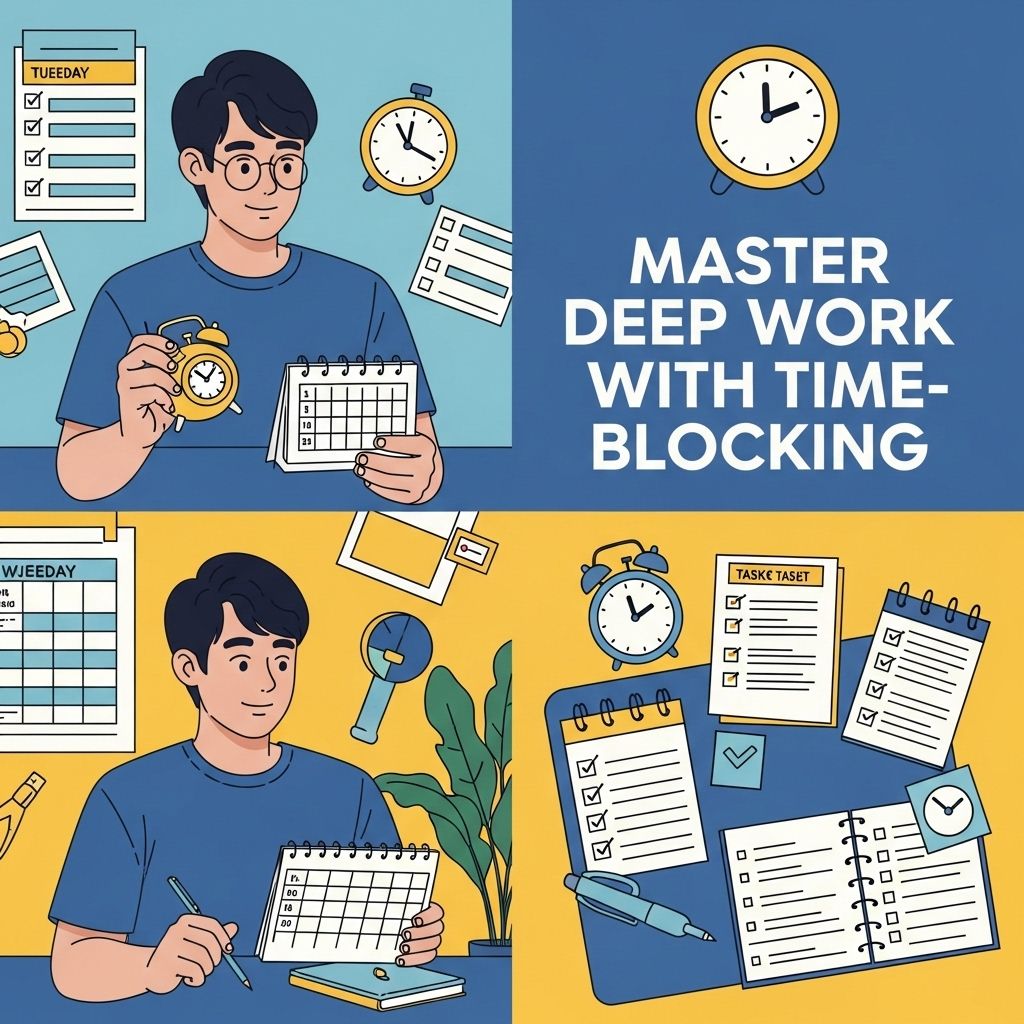
Time blocking is the practice of dividing your day into distinct blocks of time, each dedicated to a specific task or group of tasks. Instead of working reactively, you become the architect of your schedule.
1. The 90-Minute Focus Block
Human cognitive energy naturally ebbs and flows in ultradian rhythms. Research consistently shows that most people hit a peak of mental clarity in roughly 90-minute intervals. By scheduling your most challenging work into these 90-minute blocks, you align your professional output with your biological capacity.
2. The Enhanced Pomodoro Technique
While the traditional 25-minute Pomodoro is great for beginners, 2026 productivity experts recommend an enhanced Pomodoro method. This involves longer focused intervals (50 or 90 minutes) followed by a mandatory 10-minute break. This prevents burnout and keeps your brain fresh for the next round of deep work.
Proven Deep Work Techniques for 2026
Implementing structure is vital, but how you manage your environment is equally important. Use these proven methods to build an unbreakable focus habit.
- Distraction-Free Environments: Designate a specific physical or digital space for deep work. Use website blockers and “Do Not Disturb” modes to eliminate digital triggers that spike your cortisol.
- Personalized Rituals: Develop a “start-up” ritual. Whether it’s a specific playlist, a desk-clearing exercise, or a cup of coffee, rituals signal to your brain that it is time to shift into a high-focus state.
- Strategic Documentation: Keep a “distraction log” on your desk. When an intrusive thought (like “I need to check that email”) pops up, write it down and return immediately to your work. This clears your working memory without breaking your flow.
- Performance Measurement: Use tracking tools to review how long you spent in deep work versus shallow work. You cannot manage what you do not measure.
Adapting Strategies for Neurodivergence
For those with ADHD or similar neurodivergent profiles, traditional time management can feel restrictive. The best deep work strategies for ADHD prioritize external structure over raw willpower.
Instead of fighting your brain, work with it. Use visual timers to see time passing, which helps combat “time blindness.” Try body doubling—working alongside someone else, even virtually—to create a social anchor that keeps you accountable. Finally, keep your focus blocks shorter and pair them with mindfulness breaks to manage restlessness.
<img alt="Why Use Time Blocking for Deep Work Sessions? – Improve Workspace" src="https://improveworkspace.com/wp-content/uploads/2025/03/maximizefocusand_productivity.jpg” style=”max-width:100%; height:auto; border-radius:8px; margin: 1rem 0;” />
Building Your Deep Work Routine
Success in 2026 requires more than just knowing these methods; it requires consistent application. Start by auditing your current schedule. Identify your “Golden Hours”—the time of day when you feel most alert—and protect that time at all costs.
Schedule your deep work first. If you wait for a “gap” in your calendar, you will never find one. Treat your deep work blocks with the same professional respect you would a high-stakes meeting with a client. By treating your time as your most valuable asset, you ensure that you aren’t just busy, but truly productive.
Conclusion
Mastering focus and time blocking isn’t about working more hours; it’s about making the hours you work count. By embracing time blocking methods, respecting your biological rhythms, and creating a structured environment, you can achieve a level of output that was previously impossible.
As we move deeper into 2026, the professionals who succeed will be those who can disconnect from the noise and dive into the work that actually matters. Start small, iterate on your process, and watch your deep work capacity transform your career.