
Whether you are a professional chef or a home cook trying to get pasta on the table, the question of how long it takes for water to boil is a fundamental part of kitchen life. While the physics of boiling haven’t changed, the technology we use in 2026 has revolutionized the speed and efficiency of this process.
Waiting for those first bubbles to appear can feel like an eternity. However, understanding the variables—from altitude and atmospheric pressure to the power of modern induction cooktops—can help you master the clock. In this guide, we break down exactly how long you’ll be waiting and how to speed up the process.
The Science of Boiling: What’s Happening in Your Pot?
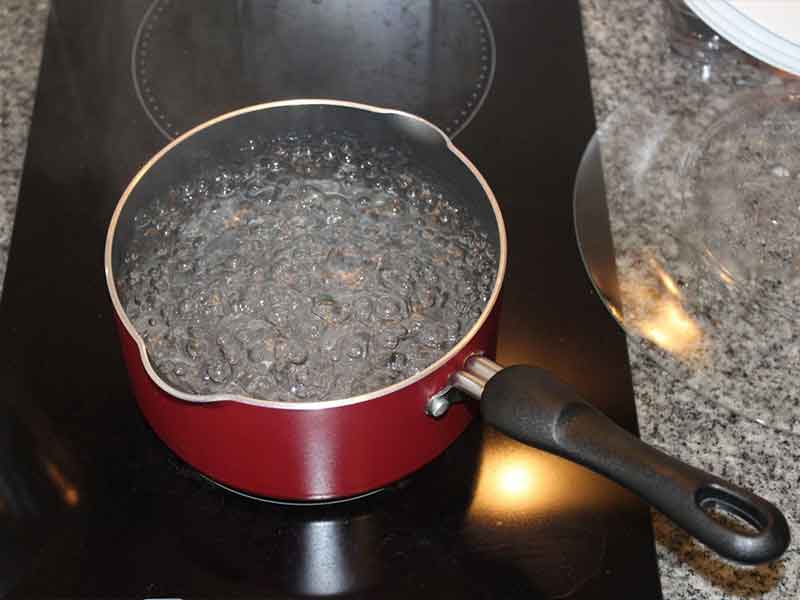
At its core, boiling is a phase transition. It occurs when the vapor pressure of the liquid equals the atmospheric pressure exerted upon it. For water at sea level, this magic number is 212°F (100°C).
As you apply heat, the water molecules begin to move faster and faster. Eventually, they gain enough thermal energy to break free from the liquid state and become steam. In 2026, we measure this with more precision than ever, thanks to smart sensors integrated into modern cookware that can detect the exact moment of “rolling boil” saturation.

Key Factors Influencing Your Wait Time
Several variables determine whether your water boils in two minutes or ten. Understanding these can help you optimize your kitchen workflow.
1. The Volume of Water
This is the most obvious factor. A single cup of water for tea will reach a boil significantly faster than a five-quart pot for spaghetti. Specific heat capacity dictates that the more mass you have, the more energy is required to raise its temperature.
2. The Power of Your Heat Source
In 2026, the gap between heating methods has widened. High-efficiency induction hubs are now the gold standard, often outperforming traditional gas burners by a wide margin. Induction transfers energy directly to the cookware via electromagnetic fields, minimizing heat loss to the surrounding air.
3. Starting Temperature and Ambient Conditions
If you fill your pot with cold tap water (typically around 55°F), it will take longer than starting with lukewarm water. Additionally, the material of your pot (copper vs. stainless steel) affects how quickly that heat is distributed to the liquid.
Average Boiling Times by Method (2026 Benchmarks)
To give you a clear idea of what to expect, here are the average times to boil one liter (approx. 4 cups) of water using various modern appliances:
- Induction Cooktop (Power Boost Mode): 2 to 3 minutes.
- Electric Kettle (1500W): 3 to 4 minutes.
- Gas Stove (High Flame): 7 to 10 minutes.
- Microwave (1200W): 5 to 7 minutes (Note: Use caution to avoid superheating).
- Traditional Electric Coil Stove: 8 to 12 minutes.

The Altitude Factor: Why Mountains Change the Rules
If you are cooking in Denver or the Swiss Alps, your water will actually boil faster, but at a lower temperature. As altitude increases, atmospheric pressure decreases. This means water molecules need less energy to escape into the air.
At 5,000 feet, water boils at approximately 203°F (95°C). While the water reaches a “boil” sooner, it is actually less hot, which means your pasta or potatoes may actually take longer to cook because the cooking temperature is lower.
Modern Kitchen Aesthetics: Waiting in Style
In the modern 2026 home, the kitchen is more than just a utility space; it is a digital sanctuary. Many high-end smart stoves now feature integrated OLED displays on the backsplash or the cooktop surface itself.
While you wait for your water to reach its boiling point, these displays can transform your environment. Users often choose to Download Artistic Minimal Background or Premium Gradient Art to match their kitchen’s decor. Whether it is a Sunset texture or a Landscape illustration, these visuals redefine the cooking experience, making the few minutes of waiting feel like a moment of relaxation.
Professional ultra HD resolution meets artistic excellence in these displays, allowing you to view Stunning Full HD Light Pictures while your smart kettle syncs with your mobile device to alert you when the water is ready.
Common Myths: Does Salt Really Make Water Boil Faster?
There are many “old wives’ tales” regarding boiling water. Let’s look at the facts:
Adding Salt: Technically, adding salt increases the boiling point (a phenomenon called boiling point elevation), meaning it actually takes longer* for the water to boil. However, the amount of salt we use in cooking is so small that the difference is negligible—usually less than a second.
- Cold vs. Hot Water: Some believe cold water boils faster because it contains more dissolved oxygen. This is a myth. Hot water starts closer to the boiling point and will always reach it sooner, though you should ensure your hot water heater is clean and safe for drinking water.
- The “Watched Pot”: While it feels like it takes longer when you watch it, the physics remain the same. However, keeping a lid on the pot is the single best way to reduce boiling time by trapping heat and increasing pressure.
Pro Tips to Speed Up the Process
If you are in a rush in 2026, use these professional strategies to shave minutes off your wait time:
- Use a Wide Pot: Increasing the surface area in contact with the heat source allows for faster energy transfer.
- Keep the Lid On: This prevents evaporative cooling, trapping the steam and heat inside the vessel.
- Use Only What You Need: Don’t fill a giant pot if you only need two cups of water.
- Electric Kettle Assist: Many chefs now boil water in an electric kettle first (the most efficient method) and then pour it into a pot on the stove to maintain the boil.
- Clean Your Cookware: Scale buildup on the bottom of a kettle or pot acts as an insulator, slowing down heat transfer.
Conclusion: Mastering the Boil
How long it takes for water to boil depends on a synergy of physics, environment, and technology. In 2026, with the advent of ultra-fast induction and smart appliances, the wait is shorter than ever. By understanding the impact of volume, altitude, and heat source power, you can streamline your cooking and spend less time watching the pot and more time enjoying your meal.
Next time you find yourself waiting, take a moment to appreciate the visual excellence of your modern kitchen displays, and remember that even the simplest act of boiling water is a fascinating display of scientific principles at work.