
In an era defined by rapid technological shifts and AI-driven automation, the ability to learn new skills has become the ultimate competitive advantage. Whether you are looking to master coding, pick up a new language, or learn the nuances of digital marketing, the question remains the same: How long does it take to learn a new skill?
Many people are paralyzed by the misconception that they need years of study to become competent. However, the landscape of learning has evolved significantly by 2026. By understanding the science of skill acquisition, you can stop guessing and start progressing.
<img alt="How long does it take to learn a new skill?" src="https://media.licdn.com/dms/image/C4D12AQEhN-kcebawbw/article-coverimage-shrink600_2000/0/1587971394779?e=2147483647&v=beta&t=b1P5LkbI-ixc-73ST9ohIvXfNxhljRyf9WFPgpsVT-s” style=”max-width:100%; height:auto; border-radius:8px; margin: 1rem 0;” />
The 20-Hour Rule: Achieving Functional Competence
If your goal is not world-class mastery but rather functional competence, the barrier to entry is much lower than you think. Josh Kaufman, author of The First 20 Hours, suggests that 20 hours of focused, well-structured practice is enough to transition from a complete novice to a competent practitioner.
- The Math: 20 hours equates to roughly 45 minutes of deliberate practice per day for about a month.
- The Focus: This approach requires you to deconstruct the skill into smaller, manageable sub-skills and eliminate distractions.
- The Result: By focusing on the most important 20% of the material, you can achieve 80% of the results.
Moving Toward Mastery: The 6-Month Milestone
Once you have surpassed the “functional” stage, the path to becoming truly skilled—where you can perform reliably under pressure—typically requires a deeper commitment. In 2026, industry experts and educational psychologists agree that achieving a specialized or advanced level usually takes about 6 months of consistent, dedicated effort.
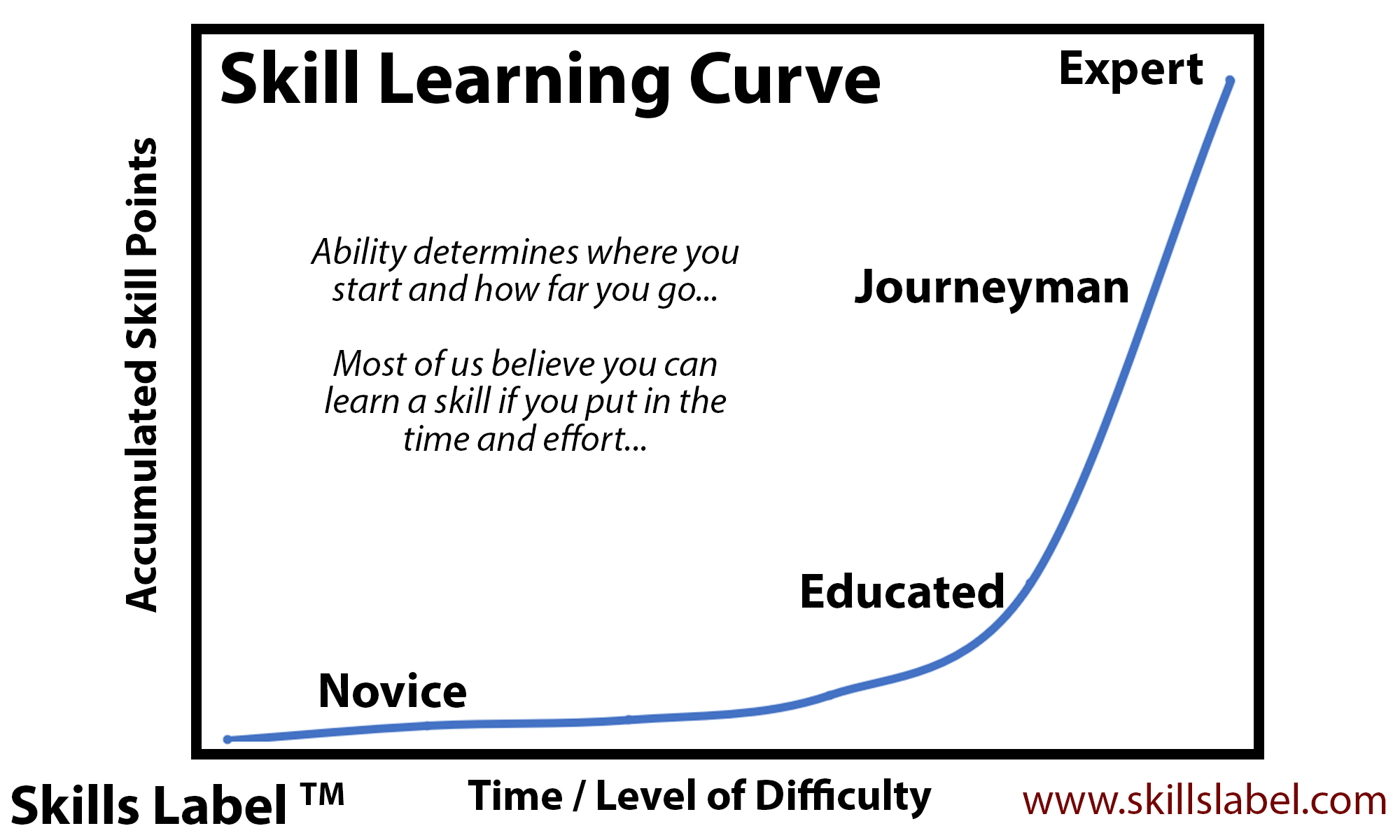
During this phase, you are no longer just learning the basics; you are refining your technique, building muscle memory, and integrating the skill into your professional or personal workflow. This period is often where most learners quit, but consistency here is what separates the hobbyists from the experts.
The 10,000-Hour Myth: Understanding True Mastery
You have likely heard the “10,000-hour rule,” popularized by Malcolm Gladwell. While it serves as a helpful benchmark for world-class mastery—such as becoming a concert pianist or a professional athlete—it is often misinterpreted as the requirement for general learning.
- Complexity Matters: The time required for mastery is heavily dependent on the complexity of the skill.
- Deliberate Practice: It is not just about the hours you put in; it is about the quality of the practice. Deliberate practice involves setting specific goals, receiving immediate feedback, and pushing past your current comfort zone.

Factors That Influence Your Learning Speed
Not every learner starts from the same place. Your personal trajectory depends on several variables that fluctuate in 2026:
- Individual Aptitude: Your prior knowledge and natural inclination toward a subject can accelerate the initial learning phase.
- Learning Methods: Using AI-assisted tutors or immersive environments can drastically shorten the time required to grasp complex concepts.
- Environmental Support: Having a mentor, a structured curriculum, or a peer group provides the necessary feedback loops to keep you on track.
- Consistency: Learning for two hours once a week is significantly less effective than 20 minutes of daily, focused practice.
How to Accelerate Your Learning in 2026
If you want to speed up your learning curve, focus on these three pillars:
- Deconstruct the Skill: Break down the big goal into smaller, bite-sized components. Tackle the most impactful sub-skills first.
- Feedback Loops: You need to know when you are wrong. Use tools, software, or mentors to get instant feedback on your performance.
- Eliminate Barriers: Remove the friction that prevents you from practicing. If you want to learn coding, have your environment set up and ready to go before you sit down.
Conclusion
How long does it take to learn a new skill? The answer is entirely dependent on your definition of “learning.” If you want to be functional, commit to 20 hours. If you want to be a specialist, prepare for 6 months. If you aspire to be the best in the world, be prepared for a long-term commitment to deliberate practice.
In 2026, the most valuable skill you can possess is the ability to learn how to learn. By focusing on efficiency, consistency, and targeted practice, you can master any subject you set your mind to. Stop worrying about the clock and start your first 20 hours today.